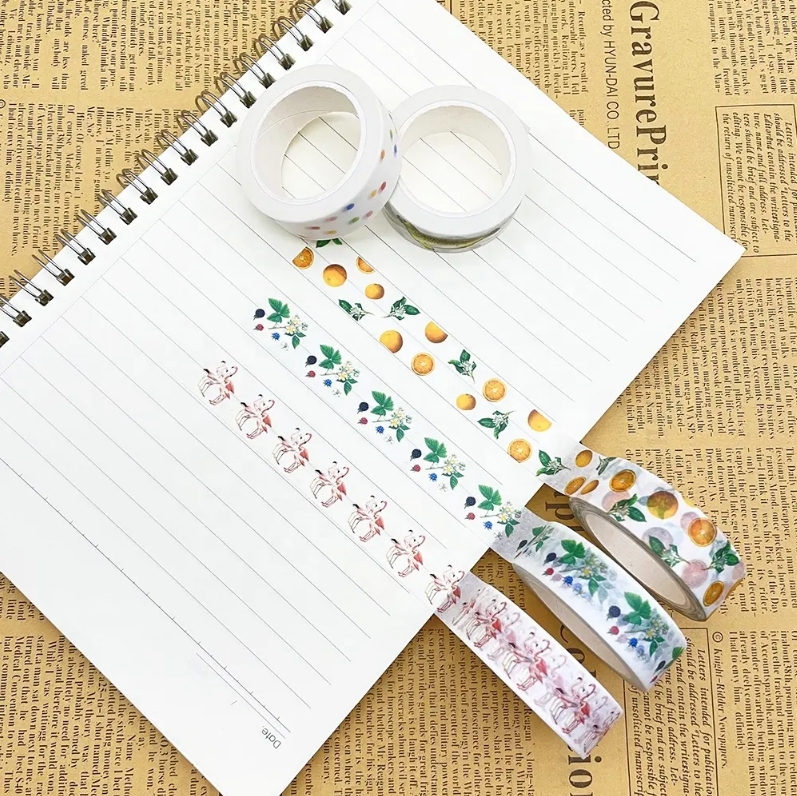
In the vibrant world of crafting and stationery, a humble Japanese artifact has transcended its cultural roots to become a global sensation. Washi Tape, a product of Japan's rich heritage in paper-making, is now not just a functional tool but an embodiment of creativity and artistic expression. This article delves into the journey of Washi Tape, from its origins as a simple paper adhesive to its current status as a versatile medium that inspires artists worldwide.
Origins and Traditional Use
Washi Tape, known for its delicate beauty and durability, was originally developed in Japan as a way to preserve and repair traditional Japanese paper (washi). Crafted from the inner bark of specific trees, such as mulberry, this tape was traditionally used in various applications, including bookbinding, wrapping gifts, and decorative arts. Its unique properties—such as being water-resistant, easy to unwind without leaving residue, and having a variety of patterns and colors—made it indispensable in Japanese culture.
Transition to Modern Popularity
The transformation of Washi Tape into a global phenomenon began in the late 20th century when manufacturers started producing tapes with a wider range of designs and colors, making them more accessible and appealing to a broader audience. This innovation sparked a creative explosion, turning the humble tape into a versatile tool for DIY projects, scrapbooking, and even interior design.
Global Impact
Today, Washi Tape is not only a symbol of Japan's craftsmanship and attention to detail but also a testament to the universal language of creativity. It has become an integral part of the crafting community, inspiring countless projects from handmade greeting cards to intricate wall decorations. Brands have capitalized on this trend by offering Washi Tape in diverse themes, from nature-inspired patterns to abstract designs, catering to different artistic preferences.
Environmental Consciousness
As environmental awareness grows, Washi Tape has also gained popularity due to its eco-friendly credentials. Made primarily from natural materials, it is biodegradable and compostable, aligning with modern sustainability efforts. This has further enhanced its appeal among environmentally conscious consumers and artisans.
Conclusion
From its humble beginnings as a functional tape in traditional Japanese crafts, Washi Tape has evolved into a global icon of creativity and sustainability. Its journey reflects the power of innovation and cultural exchange in shaping new trends. As Washi Tape continues to inspire artists and crafters around the world, it stands as a bridge between tradition and modernity, illustrating the enduring spirit of artistic expression through simple yet ingenious tools.